How Infusion Therapy Works: A Patient Guide from Big Sky IV Care
At Big Sky IV Care, we believe informed patients feel more confident about their care. If you or a loved one has been recommended for infusion therapy, you may be wondering what it involves, how it works, and what to expect. This guide will walk you through the basics in a clear, professional, and reassuring way.
What Is Infusion Therapy?
Infusion therapy is a method of delivering medication directly into the bloodstream through an intravenous (IV) line, or sometimes by injection under the skin (subcutaneous infusion). Unlike oral medications, which must pass through the digestive system, infusion therapy allows medication to enter the body more directly and efficiently.
This method is often recommended when:
- Oral medications are not effective
- Higher medication doses are needed
- Faster absorption is required
- Close clinical monitoring is important
- The medication cannot be taken by mouth
Infusion therapy is commonly used to treat chronic and complex conditions such as autoimmune disorders, neurological diseases, infections, immune deficiencies, and certain inflammatory conditions.
How Infusion Therapy Works
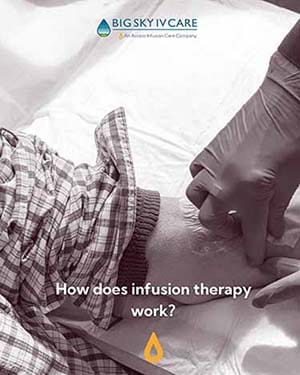
Infusion therapy works by administering medication directly into your bloodstream through a small catheter placed into a vein—typically in your arm or hand.
Here’s what typically happens during a visit to Big Sky IV Care:
- Clinical Assessment
Before treatment begins, our clinical team reviews your physician’s orders, medical history, and current health status. We confirm dosing, monitor vital signs, and answer any questions you may have. - IV Placement
A trained nurse gently inserts a small IV catheter into a vein. This process is like having blood drawn and typically takes only a few minutes. - Medication Administration
Your medication is delivered through the IV over a prescribed period. Depending on the treatment, this may take anywhere from 30 minutes to several hours. The infusion rate is carefully controlled to ensure safety and effectiveness. - Monitoring and Support
Throughout the infusion, our team closely monitors you for comfort and safety. We track vital signs and watch for any potential reactions. Most patients relax, read, work, or watch a show during treatment. - Post-Treatment Care
After the infusion is complete, the IV is removed, and we provide any necessary follow-up instructions. Some treatments require regular visits, while others may be short-term.
Why Intravenous and Subcutaneous Therapy Are Effective
Infusion therapy provides several important clinical advantages:
-
- Precise dosing for consistent therapeutic effect
- Faster absorption compared to oral medications
- Higher bioavailability, meaning more of the medication reaches its target
- Close medical supervision in a controlled environment
Because the medication bypasses the digestive system, infusion therapy is especially beneficial for patients who cannot tolerate oral medications or who require complex biologic therapies.
What Infusion Patients Often Ask
Will it hurt?
Most patients describe IV placement as a brief pinch. After that, discomfort is minimal.
How often will I need treatment?
This depends on your specific condition and medication. Some therapies are weekly, others are monthly or less frequent.
Are there side effects?
As with any medication, side effects are possible. Our team monitors you during treatment and provides guidance on what to expect.
Partnering in Your Care
Infusion therapy can be an important step in managing complex health conditions. Understanding how it works can ease anxiety and help you feel more prepared.
At Big Sky IV Care, we are committed to delivering safe, efficient, and patient-centered infusion services. If you have questions about your upcoming treatment or want to learn more about whether infusion therapy is right for you, our team is here to help. Your care matters—and we’re honored to be part of your healthcare journey.